YOUR MORTGAGE AT L.A.S.T.
London And St. Thomas
Servicing Southwestern Ontario
We May Not Be Your First But We Will Be Your Last
Our Mission
Our goal is simple: to make getting a mortgage in London and St. Thomas clear, fast, and seamless while helping secure your future.
We work closely with the area’s top local realtors who share our commitment to delivering an exceptional client experience. By combining our advanced technology and experience with our extensive network of lenders, we have the edge to be solution-oriented. Customizing a mortgage plan that sets you up for long-term success.
Why Work With Us?
We Team Up with Your Realtor and Legal Representative: Buying a home is a team effort. We stay in constant communication with your real estate agent and lawyer to ensure everyone is working toward the same goal. By coordinating financing, documentation, and important deadlines, we help keep your purchase on track and minimize the stress of closing.
We Work With Your Bank So You Don't Have To: Tired of limited hours and staff turnover? We simplify the mortgage process by handling all communication and paperwork for you. With 15 years of in-branch banking experience and a single, dedicated point of contact, we eliminate the stress of banking so you can focus on what matters: finding your home.
More Lenders Mean Better Options: We don't just look at one bank. We match your file with multiple financial institutions to find competitive rates, faster approvals, and options other brokers might miss.
Neighbours, Not Just Brokers: We actually live here in London and St. Thomas. We enjoy exploring the local neighbourhoods inside and out, and we promise to give you straightforward, honest advice every single step of the way.

MOST REQUESTED
Enter to Win!
Use this poll to tell us what's been your toughest challenge attaining homeownership (and see how many others share your pain).
This contest is only open to L.A.S.T. Members
1 of 4
What has been your toughest challenge with attaining homeownership?
Pick one:
2 of 4
Complete Your Entry
Provide your details so we can contact you if you win.
3 of 4
Get an Extra Ballot
Tell us more about your challenge for an extra entry.
This helps us understand and support the community's needs.
4 of 4
RECENT REQUESTS
I have been studying in the medical field and worked as a physiotherapist for 2 years as an employee. I have transitioned as a self-employed person for 6 months now. Could I attain a mortgage?
- Yes, you can! Call TJ & Kevin to learn more.
Our expert members
Get to know our hard-working team behind your dream!

TJ Wright
Mortgage Agent, Level 1 & Client Relations

Kevin Sankar
Mortgages (Level 2), Insurance & Sales
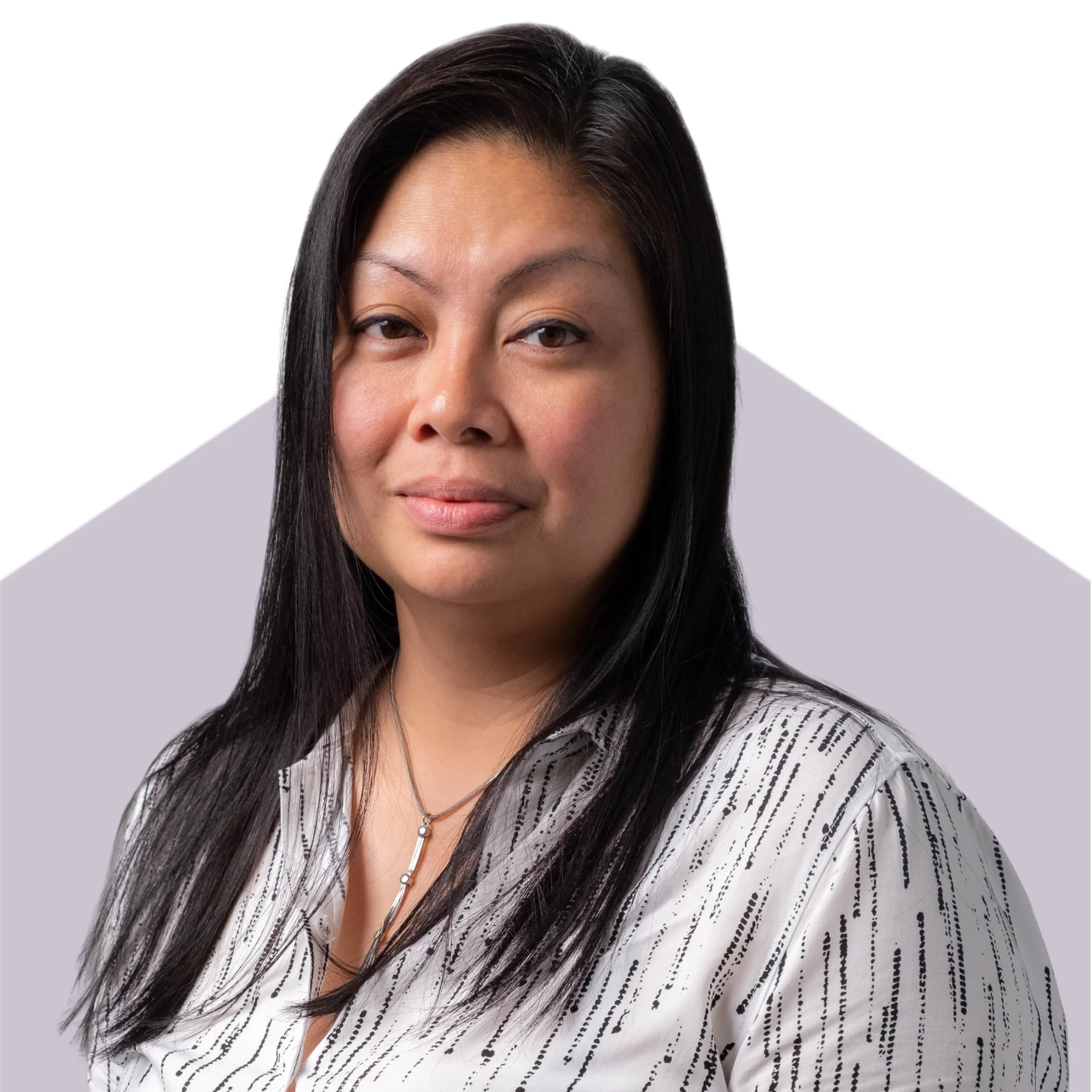
Jennifer Roberto
Underwriting Specialist

Peter Weil
Senior Agent (Level 2), Lender Relations
Did You Know
This program was created to help moderate-income renters purchase an affordable home. It is a partnership between the Government of Canada, the Province of Ontario, and the City of London through the Ontario Priorities Housing incentive.
Kevin and TJ are licensed mortgage agents with extensive experience in homebuyer programs and incentives—your trusted local experts dedicated to helping you take full advantage of every opportunity and guiding you seamlessly through the entire
Homeownership Assistance Program process.
How do I qualify for this program?
To be eligible, applicants must:
• Have a conditional offer on a home they intend to purchase
• Be at least 18 years old
• Have a combined household income within program limits ($95,000 for single applicants and
$115,000 for multi-person households)
• Be currently renting in the City of London or County of Middlesex
• Not own any residential property (including cottages or recreational properties), and not be living
with someone who does
• Agree to occupy the home and not rent it out for the duration of the loan
• Be pre-approved for a mortgage and able to demonstrate affordability
Not sure if you qualify? Kevin and TJ will review your situation, walk you through the requirements, and help position you for approval from the start. Contact TJ and Kevin today and find out how to qualify!
There are other existing down payment assistance programs that contribute to the down payment of your home. This strategy is called co-buying a home. The co-owner is a company designed to lend down payment, and is not a person. The percentage of the down payment that you contribute translates into the percentage of equity you have in the home. This determines how the home’s appreciation is shared when it is sold.
So, if you contribute 40% of the down payment and the co-buyer contributes 60%, you would have a 40% stake in the home’s available equity. That would be 40% ownership in something you would not have if you were renting.
You can co-own the home together for up to 30 years. Of course, you are free to sell the home, or make an offer to buy the co-owner's share, at any time.
The money invested into your home is not a loan to you, the co-buyer is buying a share in the future value of the home. That is why there is no interest or monthly payments.
You can include a warranty on a pre-owned home, though lenders typically refer to them as Home System Service Plans or Home Appliance Plans rather than traditional builder warranties.
These optional plans can be rolled into your mortgage package through specific lenders to protect you against unexpected repair costs after you move in.
Coverage: It generally covers eligible home repairs up to $10,000 annually.
Important Product Exclusions If you want to include one of these warranty plans, you must be careful about which specific mortgage product you select. With highly discounted, restrictive "no-frills" mortgages, home warranties are explicitly not available.
If peace of mind is a priority for your pre-owned home purchase, make sure to let your TJ or Kevin know so they can place you in a standard product rather than a restricted loan. Contact TJ and Kevin today and find out how to qualify!
If you are buying a home that needs some upgrades, or refinancing your current home to do renovations, you can roll the costs directly into your mortgage using a Purchase Plus Improvements (or Refinance Plus Improvements) program.
This prevents you from having to take out a high-interest personal loan or put the entire renovation on credit cards. Here is a step-by-step breakdown of exactly how the process works:
1. Get Official Quotes Before You Buy You cannot just ask the lender for extra money; you must prove exactly what the money is for. At the time of your mortgage application, you must provide your lender with a detailed list of the proposed improvements along with official quotes or cost estimates from your contractor.
2. The Lender Approves the "As-Improved" Value The lender will use your contractor quotes to determine the "as-improved" value of the home (what the home will be worth after the renovations are done). Your maximum loan amount will be based on this new, higher value.
The Limits: Lenders and mortgage default insurers (like CMHC) strictly cap how much you can borrow for improvements. Depending on the lender, improvements are generally limited to 10% to 20% of the property's value, and usually capped at a maximum of $40,000 to $100,000.
3. The "Holdback" (Closing Day) On the day your mortgage closes, the lender does not give you the renovation money immediately. Instead, the lender advances the main mortgage funds to complete the purchase of the home, but the funds designated for the renovations are "held back" in trust by your real estate lawyer.
4. You Front the Costs to Complete the Work You must pay for the renovations up front using your own savings or temporary credit (like a line of credit). This is to protect the lender in the event the contractor does not finish the work, and the project is unfinished, and home left undervalued. The homeowner bears the risk. Finding a trustworthy contractor is key. Most lenders require the work to be completed within a strict timeline, typically between 120 to 180 days.
Note on Progress Draws: Standard Purchase Plus Improvement programs do not allow you to take the money out in stages to pay your contractor. However, if you are doing a massive project (over $40,000), there are lenders who allow for up to 3 "draws" (staged payouts).
5. Final Inspection and Reimbursement Once the renovations are finished, you must prove the work is done so your lawyer can release the held-back funds to reimburse you.
For smaller jobs (usually $15,000 or less): Lenders will often just ask to see paid invoices and before/after photos.
For larger jobs: The lender will require an official inspection by an approved appraiser to verify the work was completed exactly as quoted. You are typically responsible for covering the cost of this inspection. Once the lender signs off, your lawyer releases the funds to you.
Purchase price is limited but there is potential.
MAXIMUM TARGET PURCHASE PRICE: Up to 4.5x total family gross annual income (Estimate based on average Canadian debt levels at time of underwriting.)
CLIENTS WHO ARE NOT MORTGAGE-READY DUE TO:
Bruised credit history or limited established credit
Short employment tenure
Self-employed clients with income not fully declared
Newcomers to Canada
Clients with strong employment and good credit who lack sufficient down payment

Looking to purchase my first home
First, it is important to know if you legally qualify as a first-time homebuyer (FTHB), as this status unlocks specific perks. You are considered an FTHB if you meet one of the following criteria:
You have never purchased a home before.
In the past 4 years, you have not occupied a home as your principal residence that you or your current spouse/common-law partner owned.
You have recently experienced the breakdown of a marriage or common-law partnership and have been living separately for at least 90 days.
Savings Programs Designed for You To help you accumulate your down payment, the government offers specialized tax-advantaged accounts:
First Home Savings Account (FHSA): This is a registered plan that allows eligible first-time homebuyers to save up to $40,000 tax-free for their down payment. As long as conditions are met, the withdrawal is tax-free.
Home Buyers’ Plan (HBP): This program allows you to withdraw up to $60,000 from your individual Registered Retirement Savings Plan (RRSP) tax-free to buy or build a qualifying home.
(Note: You may hear about the government's First-Time Home Buyer Incentive (FTHBI) shared equity program, but be aware that this program was officially discontinued in March 2024).
Down Payment Rules and Gifts You do not necessarily need a 20% down payment. For an insured mortgage, the minimum down payment requirements from your own resources or a gifted source are:
5% on the first $500,000 of the purchase price.
10% on the portion of the purchase price between $500,000 and $1,000,000.
Properties priced at $1 million or more require a minimum 20% down payment.
If you haven't saved the full amount, most lenders allow the remainder of the down payment to be gifted from an immediate family member (such as a parent, grandparent, sibling, or child), provided they sign a gift letter confirming the funds do not need to be repaid.
Extended 30-Year Amortizations Typically, if you have a down payment of less than 20% (an insured mortgage), the maximum time you have to pay off the loan is 25 years. However, a recent rule change specifically benefits first-time homebuyers: You are eligible for a 30-year amortization on an insured mortgage. Stretching the loan over 30 years can significantly lower your required monthly payments and make qualifying easier.
Closing Costs Are Extra In addition to your down payment, you must prove you have funds set aside to cover closing costs, which are expenses like legal fees, home inspections, and land transfer taxes. Lenders generally require you to show you have an additional 1.5% of the purchase price saved for these costs (or 0.5% if you are purchasing in Alberta).
Qualifying for the Mortgage When you apply, lenders will calculate your Gross Debt Service (GDS) and Total Debt Service (TDS) ratios to ensure you can afford the home. For insured mortgages, your housing costs should typically not exceed 39% of your gross income (GDS), and your total housing costs plus other debts (like car loans or credit cards) should not exceed 44% of your gross income (TDS). You will also generally need a minimum credit score of 600, though scores of 640 or 680+ are often required for the best programs. These ratios can be extended on exception. Also if your down payment is 20% or greater, these ratios can be vastly increased.

I own my own business, but don't qualify at my bank
This is usually because tax write-offs have lowered your official net income, or because you haven't been in business long enough—you still have several excellent options
Alternative lenders and specific bank programs offer "Business for Self" (BFS) solutions that focus on the true cash flow and financial strength of your business, rather than just your traditional tax returns.

I'm a senior, and want a second home
Reverse Mortgages: Access your current home's equity without having to make monthly mortgage payments. You can use these tax-free funds to buy a second property or gift a down payment to family.
Gift a Down Payment: You can give a down payment to a child or grandchild using your savings or equity, as long as you sign a letter confirming the money does not need to be repaid.
Co-Sign (Family Plans): Mortgage insurers like Sagen and CMHC have specific programs that allow you to co-sign and help an adult child or parent purchase an owner-occupied home.
Buy a Second Home for Family: You can buy a secondary property with as little as 5% down, provided an immediate family member will live there rent-free.
Alternative Mortgages for Fixed Incomes: If traditional banks decline you due to a limited retirement pension, alternative lenders offer flexible mortgages specifically designed to help retirees purchase another property.

I'm a Current Homeowner. How Do I Know If I'm Getting the Maximum Benefits From My Mortgage?
In fact, many have never had a licensed independent mortgage professional review their mortgage to ensure it still aligns with their current financial goals, family needs, and future plans. Instead, they often rely solely on the advice provided by the lender that holds their mortgage.
While bank mortgage specialists can be a valuable resource, it's important to understand that they are employed by and represent a single financial institution. Their role is to offer and promote the products and services available through that specific lender. TJ and Kevin work differently. As licensed independent mortgage professionals, they have access to multiple banks, credit unions, monoline lenders, and alternative lending solutions. This allows them to compare a wide range of mortgage products, rates, features, and qualification options to help determine what best suits your unique situation
During our complimentary mortgage review, TJ and Kevin take the time to review the features, restrictions, and opportunities within your current mortgage so you can make informed decisions and ensure you're getting the maximum benefit from one of your largest financial commitments.
We'll help answer important questions such as:
Am I paying a competitive interest rate?
Does my mortgage still fit my current needs?
What happens when interest rates change?
Do I have enough protection if something happens to me?
Could I save money or pay off my mortgage faster?
Am I missing opportunities to improve my financial position?
Is my mortgage structured properly for my future plans?
Our goal is simple: to ensure you fully understand your mortgage and have a strategy in place that supports both your current circumstances and your long-term financial goals.
I am new to Canada, how can I purchase a home here?
Here is a brief overview of the main points for purchasing a home as a newcomer to Canada:
Residency and Employment: You must be a recent Permanent Resident (arrived within the last 5 years) or hold a valid Canadian work permit, and you typically need to demonstrate at least 3 months of full-time employment.
Alternative Credit Options: You do not need a standard Canadian credit score to qualify. Lenders will accept alternative proof of creditworthiness, such as international credit reports, 12 months of documented rent and utility payments, or a reference letter from your home country's bank.
Down Payment Sources: You can buy a home with a minimum of 5% to 10% down, which must come from your own savings or be gifted by an immediate family member. If your funds are coming from outside of Canada, you must provide a detailed paper trail verifying the source.
Flexible Debt Limits: While standard newcomer programs restrict your debt ratios to 39% of your income for housing and 44% for total debt, some alternative lenders will allow you to spend up to 55% of your income on these obligations.
OUR FAVOURITE LOCAL BUSINESSES